The Department of Health and Human Services and the Department of Education asked medical schools today to strengthen nutrition education across pre-med, medical school and residency, and to report their commitments within two weeks. Whether the departments can enforce anything is unclear; the accrediting bodies set the curriculum. The number behind the request is older than the request: a 2015 study found that US medical students receive, on average, about 19 hours of required nutrition education over four years. Nineteen hours, to prepare for a career in which most of the disease you will treat is diet-related.
What the gap produces. A patient with a question about food has two options: a physician with nineteen hours, or an internet with infinite hours and a product to sell at the end of each one. The second option is more confident, more available and more wrong. The supplement and diet industries are, in a real sense, the size of the hole in the medical curriculum. That is not a reason to distrust your doctor on nutrition. It is a reason to notice who filled the silence.
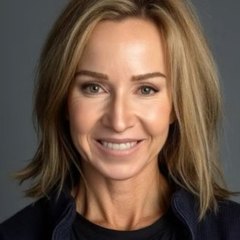 Loree’s take
I learned clinical nutrition after my degree, in more than a thousand hours of functional-medicine training, because it was not in the degree. Most clinicians have not had the time or the reason to do that, and so the patients who know the most about nutrition are often the ones who learned it from influencers — confidently, in detail, and frequently backward. A doctor who cannot answer a nutrition question is a policy failure. A podcast that answers it is a business.
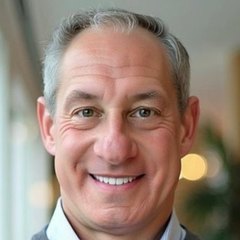 Ben’s take
Markets form wherever an institution leaves a gap. If the medical system does not talk about food, someone else will, for a margin. A directive will not close that gap this year, and I would not bet on the enforcement. But the direction is right, and it is the only direction that shrinks the market for nonsense: put the answer where the trust already is.
Why it matters to a recovering optimizer. The answer the curriculum leaves out is not complicated. Mostly real food, mostly plants, not too much, shared with people. Nineteen hours would cover it. The industry that stepped into the gap has an interest in making it sound like it needs nineteen thousand.
Ask your doctor one nutrition question at your next visit. If they can't answer it, that's a policy problem — not a reason to trust a podcast instead.